
Go on ahead without me
A love note to those of us who are simply incapable of consistency

“It’ll take as long as it takes”.
She’d say.
That was her response to pretty much any time-related question. My mother, that is. It used to drive me absolutely cotton bananas.
It was the theme song to my childhood. What’s for tea? How long will it take? Where are we going? How long will it take? Are we nearly there? How long will it taaaaaake?
…It’ll take as long as it takes.
I hated it because I lived the first large portion of my life upside down and in fast-forward. I was permanently over or under-stimulated. Unchecked ADHD running the whole operation like a feral project manager with no clipboard and too much coffee. I wanted timelines (that I would break, naturally). I wanted boundaries. I wanted ETAs. I wanted someone to tell me how long this was going to take so I could decide whether it was worth starting.
My mum, infuriatingly, refused.
She also read four books at any one time, grew the kind of unruly, unkempt garden that made the neighbours quietly furious, would fully shout at the TV when Liverpool were playing, not once in her life ever suffered from shame (she didn’t see the point of being embarrassed), raised four children who turned out mostly alright, and never once appeared to be in a rush, even though she was absolutely almost always late for something. She moved through life the way some people move through cathedrals. Slowly. Looking up a lot.
I did not inherit this.
I inherited the other thing. The thing where you have forty-seven ideas before breakfast and abandon thirty of them by lunch. The thing where you work in furious, obsessive bursts that scare the people who love you, and then go completely silent for weeks and convince yourself you’ll never make anything good again.
For most of my life, I thought this meant I was broken.
Because the advice, everywhere, was unvarying: be consistent.
Write on a schedule. Post every day. Show up every day. Organise your days. The algorithm rewards consistency. Your audience expects consistency. Discipline equals freedom. Routine equals results. The people who win are the people who never stop.
And I’d try. God, would I try. I’d build the schedule. Buy the planner. Set the alarm. And it would work, brilliantly, for somewhere between eleven days and three weeks. Then something would shift. The energy would drain out like water from a bath. The words would stop coming. My body would demand sleep, silence, nothing. And I’d fall off the schedule and spend the next fortnight flogging myself for being fundamentally incapable of the one thing everyone said mattered most.
Consistency.
The golden calf of the creative internet.
But the thing nobody ever really talked about, was that most successful creatives work in bursts. Not consistently the same out put, day in and day out, forever.
Virginia Woolf wrote in morning bursts and spent her afternoons walking the Sussex Downs, letting the silence refill whatever the writing had emptied. She was explicit about needing fallow periods. She wrote some of the most important literature in the English language without a content calendar, a posting schedule, or a single accountability partner telling her she needed to show up daily to earn the right to call herself a writer.
Toni Morrison wrote before dawn, only when the writing was there, while editing other people’s books full-time at Random House and raising two sons alone. She never once apologised for her pace.
I have an ideal writing routine that I've never experienced, which is to have, say, nine uninterrupted days when I wouldn't have to leave the house or take phone calls. And to have the space—a space where I have huge tables.
Toni Morrison
Edna O’Brien, one of Ireland’s greatest writers, said plainly that she didn’t sit down 365 days a year because she wasn’t that kind of writer. She wrote four hours a day when she wrote. And when she didn’t, she didn’t.
A study from the Illinois Institute of Technology in the 1950s found that scientists who spent 25 hours a week in the lab were no more productive than those who spent five. And those who worked 60 hours were the least productive of all.
The least productive. Sixty hours a week and they were making the worst work in the building. Let that settle in your chest for a moment. Let it sit there, next to every guilt spiral you’ve ever had about not doing enough.
The author Alex Soojung-Kim Pang put it better than I can:
“When we stop and rest properly, we’re not paying a tax on creativity. We’re investing in it”
I’m telling you this because I’ve spent years thinking my rhythm was wrong. That working in seasons, going dark for weeks, needing vast quantities of silence and boredom and long walks and doing absolutely nothing before I could make anything worth reading, that this was a deficiency. A character flaw dressed up in creative language.
It isn’t.
Some of us are not built for the conveyor belt. We are built for the harvest. Long fallow stretches where it looks like nothing is happening, where it looks like we’ve gone quiet, given up, fallen behind. And then a season where everything comes at once and the writing pours out like it’s been building pressure behind a dam and someone finally cracked the wall.
I have friends who write a newsletter every Tuesday at 7am without fail and I admire them the way I admire people who can parallel park on the first try. With genuine awe and zero expectation that I will ever be one of them.
My rhythm is different. I think and write every day, but I don’t publish every day. I have seasons where I work late, where I’m in it up to my elbows, where the ideas are coming so fast I can’t catch them all so I just grab the best ones and let the others go. And then I have seasons where I barely open my laptop. Where I walk. Where I sit with my son by the river and throw rocks into the water and don’t think about content or captions or launches.
I believe both seasons make me better.
That’s the part the consistency gospel leaves out. The rest isn’t what you do between the work. The rest is where the work gets a chance to breathe. It’s the underground bit, the roots doing their thing in the dark where nobody can see them. You can’t rush roots. You can’t schedule them and expect them to cooperate.
Now, there’s a version of this that tips into something toxic in the other direction. The lie that says you should only create when you feel like it. Like you can just “trust the process” indefinitely while producing nothing and call it alignment.
That’s not what I’m saying.
What I’m saying is there have to be seasons. Seasons where you work incredibly hard. Days where you stay up late because the thing is working and you can feel it and you’d rather die than stop mid-sentence. That fire is sacred. Don’t let anyone talk you out of it.
But then there has to be the other season. The one where you let the field go bare. Where you stop producing and start collecting. Reading. Thinking. Staring out of windows. Lying on the floor. Smelling your children’s heads. Having long conversations about nothing in particular. Letting your brain get bored enough to surprise you.
I’m getting better at this. Slowly. It’s my truest goal for 2026, this fine year of the Fire Horse:
let it take as long as it takes.
I am done squeezing my best thinking into the margins. I am so done filling every hour with output so I can feel like I earned the right to sit down.
I don’t want more productivity, I really don’t want to have to be “productive”, that’s not a goal I’ve ever had. I want more of those mornings where I’m half-awake with coffee going cold and a sentence appears from somewhere I didn’t know I had access to. I want more of the slow, strange, boring, unglamorous silence that always, always precedes the best thing I’ve ever written.
Timelines are made up. Goals are just another way to separate yourself from the responsibility of having to become the version of you that you want to exist. I’ve replaced mine with something less structured and more honest: a list of who I need to become and the conditions I need to create to be the kind of person who makes and says and does the things she says she will. An environment. A life that produces good work because the life itself is good.
If you’re reading this and you’ve spent years beating yourself up because you can’t maintain the pace that everyone else seems to manage effortlessly, I want you to know something.
Those people are either wired differently from you, which is fine, why try to be like them if you’re just made different? Or they’re performing consistency while quietly falling apart, which is less fine.
Either way, their rhythm is not your rhythm. And your rhythm is not broken.
So, go on ahead without me.
I mean it. Go on ahead. Hit publish on the thing I haven’t started yet. Launch the offer I’m still dreaming about in the shower. Build the audience I don’t have the bandwidth to chase this month. Post the carousel while I’m staring at a river with my hands empty and my mind full of nothing useful.
Go on ahead. I’ll be here. Writing when the writing comes. Resting when it doesn’t. Letting the silence do what silence does when you stop being afraid of it.
Or at least, that’s what I’ll be trying.
No more living on borrowed timelines.
No more measuring my seasons against someone else’s calendar.
This year, I am not catching up. I am not keeping pace. I am not optimising my output or batching my content or showing up daily for the algorithm like a woman bringing flowers to a grave that doesn’t know her name.
This year I am letting the work take as long as the work takes. I am letting the thinking be slow and the walks be long and the drafts sit open for days without touching them. I am letting the mornings be quiet. I am letting the silence pile up like snow until something underneath it moves.
And when it moves, I will write like my hands are on fire. I will work late and forget to eat and feel that thing I only feel when the words are coming faster than I can catch them, that gorgeous, blinding, half-terrifying aliveness that no schedule ever produced and no algorithm ever rewarded and no productivity guru has ever once been able to explain to me in a way that actually makes sense.
But until then. I am still. I am collecting. I am composting.
And I am not behind. I am exactly where my story needs me to be.
My mum was right.
It’ll take as long as it takes.
Your writing practice:
Think about the last time you made something you were genuinely proud of. NOT something you posted because it was Tuesday and Tuesday is posting day. Something that surprised you or felt like it came from a place you don’t always have access to.
What were the conditions around it? Were you rested? Bored? Unhurried? Had you been doing nothing for a while?
Now think about the schedule you’ve built for your creative work. Does it honour the way you actually make things? Or does it honour someone else’s idea of what discipline looks like?
Write yourself a permission slip. What would your creative life look like if you stopped apologising for your rhythm and started designing around it?
Hi, I’m Lois. I write from my little treehouse in the Costa Rican rainforest, where I live with my little family and I help writers, entrepreneurs and creatives build businesses that feel as creatively fulfilling as they are profitable, without becoming someone they don’t recognise in the process. This is The Smoking Area, where we say the things we’re not supposed to say out loud and where we practice the costly, necessary art of sounding like ourselves. Because the most interesting conversations always happen outside the party.
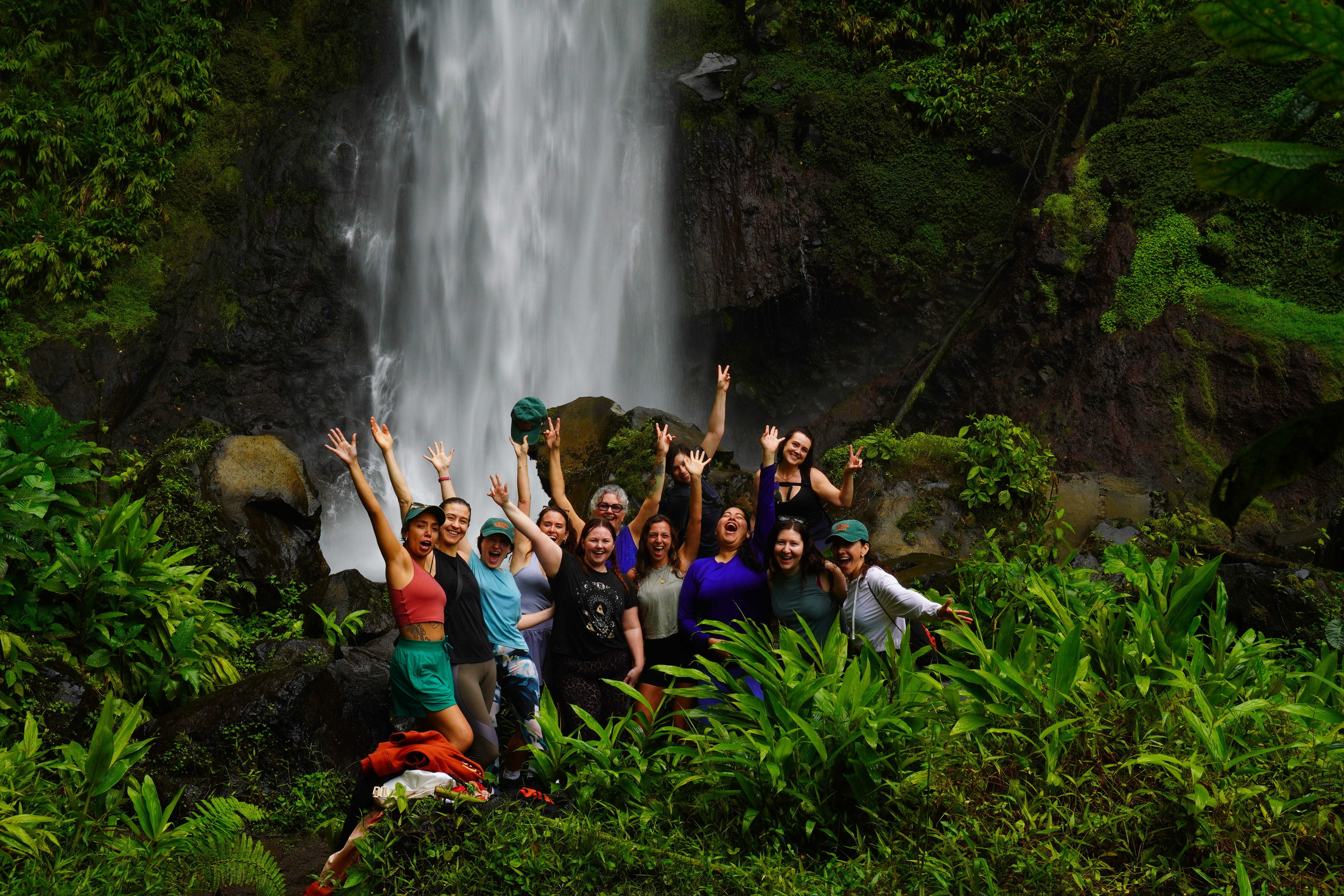
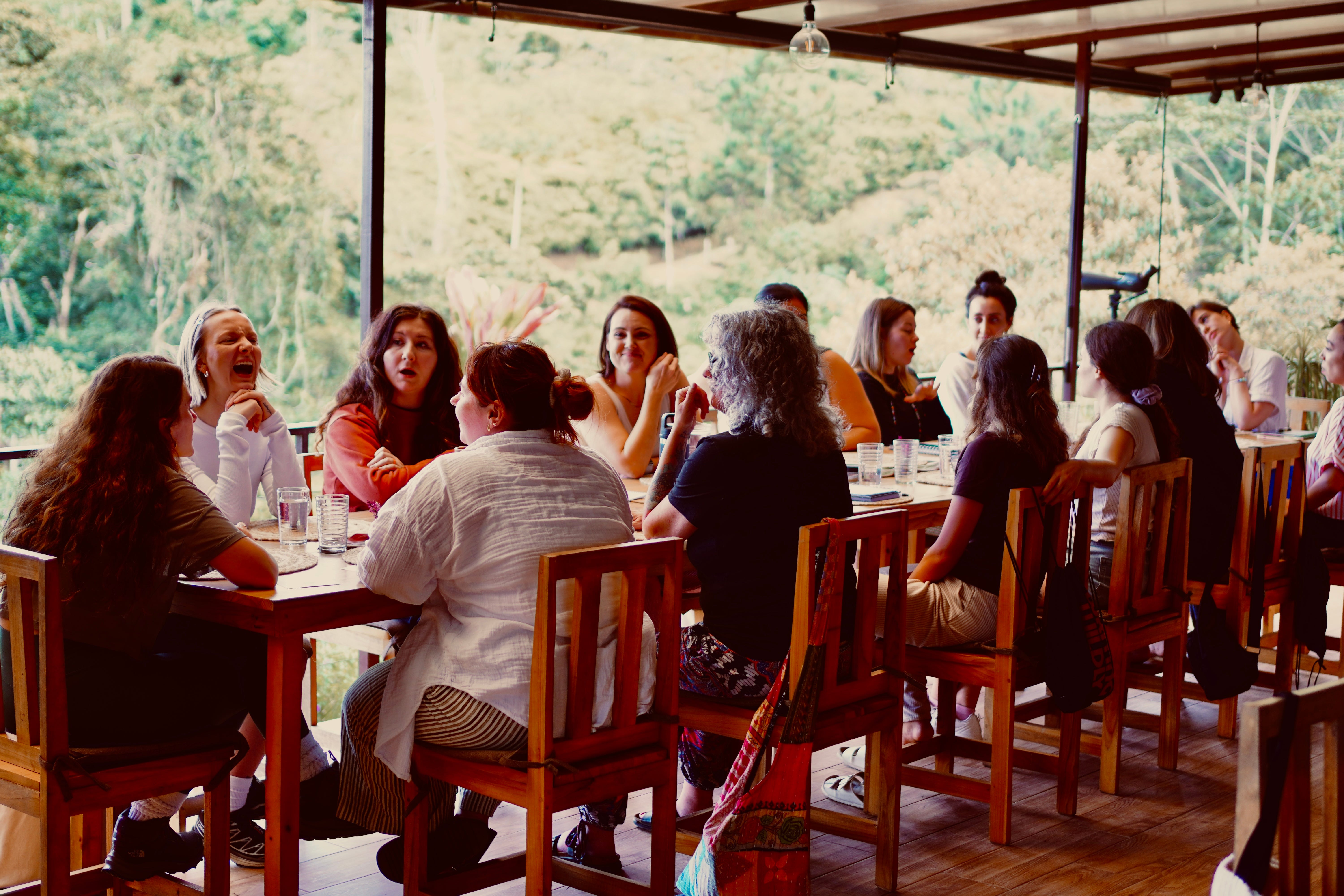
You’ll always find a writing prompt at the end of everything I post here, because reading might inspire you, but writing is what transforms you. If this piece made you want to stop squeezing your best work into the margins and start writing from somewhere slower and truer, that’s exactly what we do at Writing Wildly — five days in the Costa Rican rainforest where your most important writing finally gets to breathe. No schedule. No algorithm. Just the jungle, the river, and the kind of silence that makes sentences appear from places you forgot about. There are a handful of spots left for June and September. Come write with us.
This was heart medicine to read. Thank you deeply, Lois. ♥️
Thank you, I feel deeply connected to this.
"This year, I am not catching up. I am not keeping pace. I am not optimising my output or batching my content or showing up daily for the algorithm like a woman bringing flowers to a grave that doesn’t know her name."