
Shit, fuck & bugger
My potty mouth is actually a sign of verbal sophistication (backed by fuckin' science)

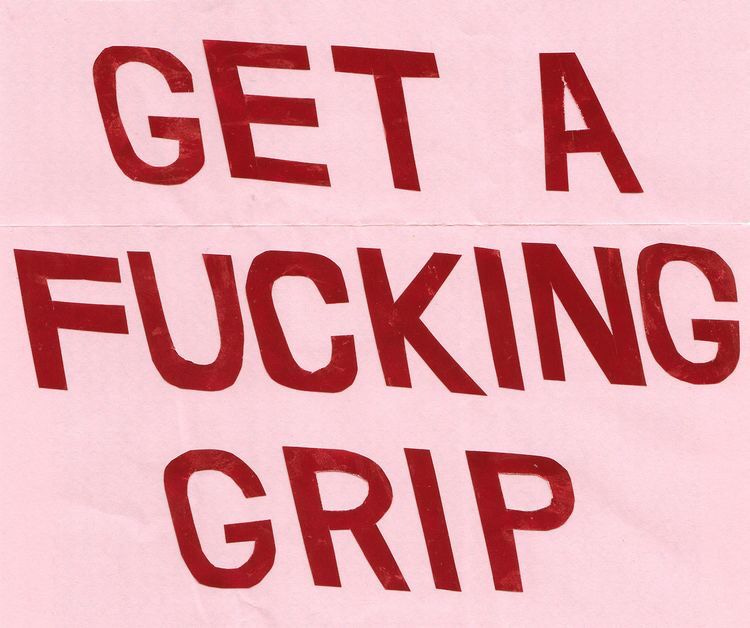
Someone once told me I’d be taken more seriously if I stopped swearing in my writing.
This was after I’d written something, I can’t even remember what, probably something about creative expression or self-censorship (delicious irony) and I’d used the word “fuck” liberally. And, not randomly either. Not as filler. But precisely, deliberately, in exactly the moments where no other word would have landed with the same force.
And this person, bless them, genuinely thought they were helping. They said, “you’re so articulate. You have such a rich vocabulary. You don’t NEED to swear”.
As if swearing and articulation were opposing forces. As if precision and profanity couldn’t possibly live in the same mouth.
As if I was reaching for a lil “fuck” here and a lil “fuck” there, because I couldn’t think of anything better.
I wanted to tell them: I can think of seventeen other ways to express frustration, anger, emphasis, or raw truth. I have a degree in journalism, have studied creative writing and have written approximately 497 pages of copy a day for about 15 years (give or take, obvs).
I’ve read Woolf and Dickens and bloody Dostoevsky (yes, I’m a bit of a wanker). I know how to write a sentence that doesn’t contain a single foul word and still makes you feel something lodged between your ribs.
But sometimes (OFTEN, I’d argue), the most precise word is actually “fuck”.
My vocabulary is wide enough to know when nothing else will do.
And as it turns out, science agrees with me.
“Fuck” is a sign of intelligence
We’ve been taught that swearing is crude. Low-class. A sign of limited vocabulary, poor education, or, worst of all, a lack of self-control.
“Intelligent people”, “polite people”, we’re told, “don’t need to swear. They can express themselves properly”.
This idea is so deeply embedded in our collective psyche that people apologise for swearing in professional settings, edit curse words out of their writing to seem more “credible”, and genuinely believe that using profanity makes them sound less than.
But, the funny thing is, that’s complete and utter bollocks.
The correlation between swearing and intelligence isn’t what you think it is. And the research, actual peer-reviewed, published-in-proper-journals research, tells a very different story than the one your Year 6 teacher led you to believe.
Turns out, intelligent people swear MORE. Not less.
And, I believe, it’s because they’re using language with more precision, more range, more understanding of exactly which word will land where they need it to.
“Fuck” is just sometimes all there is
Verbal fluency is your ability to generate words quickly and effectively. It’s one of the markers researchers use to assess language skills and, by extension, intelligence.
This isn’t people randomly shouting “shit” because they can’t think of anything else. This is people who have a wide range of linguistic tools and choose to use ALL of them, including the ones that make your mother-in-law clutch her pearls.
One study (Psychologist Timothy Jay and colleagues, if you want to get specific1) tested participants’ ability to generate both taboo and non-taboo words under timed conditions. The people with the largest general vocabularies also had the largest swearing vocabularies.
People who swear a lot aren’t doing it because they don’t know better words. They’re doing it because they DO know better words and they’ve decided “fuck” is the better word for this particular moment.
“in this land some of us fuck more than
we die but most of us die
better than we fuck”
― Charles Bukowski
Why “fuck” says more than “bugger” can
Anyone can stick a swear word into a sentence. That’s not the skill. The skill is knowing which one. And when. And why.
Because different swear words do wildly different jobs, and pretending they’re interchangeable is like saying red and blue are basically the same because they’re both colours.
Shit is for when the mundane goes sideways. For mess, frustration, a baby-poo explosion, the washing machine flooding your kitchen at 11pm. It’s earthy. Grounded. Human.
Fuck is the nuclear option. Pure intensity. It’s what you reach for when “very” just isn’t going to cut it, and you need the sentence to land like a brick through a window. It’s textured. Complex. Carries weight.
Bugger is... well, it’s very British, isn’t it? Mild exasperation with a bit of Dad energy. “Oh bugger” when you’ve forgotten your wallet is a completely different emotional register than “Oh fuck” when you’ve forgotten your wallet. One is an inconvenience. The other is the apocalypse.
And bollocks? Bollocks is for calling bullshit. Essentially, dismissal with prejudice. “That’s nonsense” is polite disagreement. “That’s complete and utter bollocks” is me telling you I think you’re not just wrong but insultingly wrong, and I’m not going to smile while I say it.
The point is: each of these words has a specific job to do. A precise emotional frequency. An exact amount of force.
And knowing which one to use, knowing when “brilliant” needs a “fucking” and when it doesn’t, that requires you to actually FEEL language. To understand how words move through bodies.
You can have the vocabulary. What you need, though, is the pulse.
That’s why, I think, you’re much less likely to encounter someone who swears because they can’t think of anything better, and much more likely to encounter someone who swears because they know exactly what they’re doing.
A note on class and culture
This isn’t actually a conversation about swearing. It’s a conversation about power and who gets to decide what intelligence sounds like. Every culture has a version of this.
There is always a “correct” way to speak. A tone that signals credibility and social queues that read as educated, trustworthy, professional. There is always another way of speaking that is coded as emotional, crude, excessive, or unserious, even when it’s precise, deliberate and actually intelligent.
For me, this isn’t theoretical.
I’m from the North of England, Lancashire. My grandparents were Irish. My parents are pretty council, in the best possible way. Swearing wasn’t a performance where I grew up. It was punctuation. It was emphasis. It was warmth, humour, frustration, honesty. It was how people spoke when they were telling the truth.
So when I’m told I’d be “taken more seriously” if I cleaned up my language, I know exactly what’s being asked of me.
Not clarity.
Not articulation.
But translation.
An invitation to sand down the parts of my voice that mark where I’m from, who I belong to, how I think and what shaped me, in order to sound more legible to a particular ideal. It’s also unsurprising that the data shows people who swear the least or find it the most offensive are the people trying to climb in social status 2.
Once language is framed as a moral issue, disagreement can be dismissed without engagement. You don’t have to respond to what was said. You only have to disapprove of how it was said.
“I don’t disagree, I just don’t like the tone”.
“I might agree, but the language undermines the point”.
“You’d be more convincing if you were less aggressive”.
Which is a very convenient position to take if you don’t actually want to interrogate your own beliefs.
For some people, not swearing is neutral. For others, it’s a shrinking. For others still, it’s a quiet erasure in exchange for conditional social acceptance. That dynamic isn’t uniquely British, either.
In the US, it plays out through race. In post-colonial contexts, through language itself. Pretty much everywhere, it’s policed per gender. Professionalism is rarely neutral. “The proper” language choice is never neutral. It’s an aesthetic. A history. A set of preferences pretending to be objectivity.
So when someone says, “you’d be taken more seriously if you didn’t swear”, what they’re often really saying is, your natural way of speaking doesn’t fit the room as it’s currently arranged.
And the solution isn’t always to make yourself smaller. Sometimes, it’s to look around and ask, do I really want to be in this room anyway?
In defence of not softening your edges
Swearing even helps with pain. Actual, physical pain.
Studies show that people who swear while experiencing pain can tolerate it better and for longer than people who use neutral words. There’s something about a “fuck” that activates your sympathetic nervous system in a way “gosh darn” or even “bloody heck” simply cannot.
Which tells you something important about these words. They’re not just sounds. They move through your body differently. They land harder. They DO something.
And maybe that’s exactly why we’re told not to use them.
Because words that carry that much force, that can literally change how you experience pain, the words that signal honesty over performance, that refuse to be polite when politeness would dilute the truth, those words are dangerous.
Not to you. To the systems that benefit from you staying quiet, palatable, appropriate.
Self-censorship of language is never just a question of language. It’s practice for censoring everything else. Your opinions. Your anger. Your refusal to pretend things are fine when they’re absolutely fucking not.
Every time I soften my language to sound more “professional”, I also soften my ideas. Every time I edit out a “fuck”, I also edit out the sharpest, truest version of what I actually think and who I literally am. The two are connected. You can’t sanitise your words without sanitising your worldview.
When someone tells you to stop swearing, to be more “professional”, more “credible”, more “taken seriously”, they’re not actually worried about your vocabulary. They’re worried about what you’re saying WITH it. They’re worried about their own discomfort and position in society.
Because a woman who says “this is problematic” can be dismissed with a nod. But, a woman who says “this is complete and utter fucking bollocks, you absolute dick heads” demands you deal with her.
I’m not saying you have to swear, of course. Swear or don’t swear, but if you don’t swear, don’t immediately assume that makes you morally superior. And if you do, if profanity is part of how you think and speak and express the full range of what you’re feeling… don’t apologise for it.
Don’t edit it out to seem more palatable. Don’t immediately edit yourself the second words form.
Don’t let anyone convince you that your potty mouth is a sign of limited intelligence when the research shows it’s the literal opposite. Don’t let anyone convince you that the raw, authentic version of your voice isn’t the absolute very best version, always.
Because when you censor your language, you get really, really good at censoring everything else, too. You start moderating your opinions before you voice them. Softening your anger before you express it and editing the sharp edges off your ideas before anyone even asks you to.
You become your own surveillance system. Monitoring yourself so thoroughly that by the time words leave your mouth, they’ve been through seventeen rounds of “is this okay to say?” and what comes out is… beige.
Don’t get me wrong, part of linguistic mastery is knowing when to code-switch. Knowing why to use “fuck” in a Substack essay and perhaps not at your nan’s funeral (depending on the Nan, of course). Knowing the difference between “fuck yes” with your best friend and “I’m very excited about this opportunity” in a client meeting.
The difference is CHOICE. Conscious, deliberate choice about when and how you adapt your language based on context. Censorship is when you don’t even THINK the word, or sentiment, in the first place because you’ve trained yourself out of it. When the sharp thought never forms because you’ve internalised someone else’s rules about what’s acceptable.
One is fluency. The other is self-erasure.
Because it doesn’t stay contained to language. The same impulse that makes you swap “motherfucker” for “very disappointed” is the same impulse that makes you say “I’m fine” when you’re not, agree to things you don’t want to do and build a whole life around being acceptable instead of being true.
Your potty mouth isn’t the problem. The problem is a world that taught you to shrink yourself for other people’s comfort. So the next time someone suggests you’d be taken more seriously without the linguistic skills of a sailor?
You can smile sweetly and tell them, politely of course, to fuck right off.
With all the verbal fluency and intellectual rigour that choice implies.
Your writing practice:
Go back through something you’ve written recently, an email, an essay, a post, even a text message, and find the places where you softened your language to sound more “appropriate”.
Now rewrite those sentences with the word you actually wanted to use. The one that feels too sharp, too strong, too much.
Notice what changes. Notice how it FEELS to write with your full range.
You don’t have to publish it. But you should know what your words sound like when you’re not performing for anyone.
Hi, I’m Lois. I write from my little treehouse in the Costa Rican jungle, where I help writers, entrepreneurs and creatives build businesses that feel like their greatest creative work, without sacrificing their voice, their values, or their sanity. This is The Smoking Area, where we say the things that don’t fit neatly on sales pages, we write out loud and we practice a good “fuck” every now and then.
You’ll always find a writing prompt at the end of everything I post here, because reading is lovely but action is where the magic lives.

“Taboo word fluency and knowledge of slurs and general pejoratives: deconstructing the poverty-of-vocabulary myth” by Kristin L. Jay and Timothy B. Jay (2015)
Main link (ScienceDirect): https://www.sciencedirect.com/science/article/abs/pii/S038800011400151X
Free PDF version: https://www.mcla.edu/Assets/MCLA-Files/Academics/Undergraduate/Psychology/fluency%202015.pdf
Key finding: The study tested participants’ verbal fluency using the Controlled Oral Word Association Test (COWAT) alongside taboo word fluency. They found positive correlations between general verbal fluency and taboo word fluency, concluding that “a voluminous taboo lexicon may better be considered an indicator of healthy verbal abilities rather than a cover for their deficiencies.”
Class and swearing (AB vs DE vs C1): From a 2004 study by McEnery & Xiao analysing the British National Corpus. The blog discussing it is here: https://thatseffingamazing.wordpress.com/2012/02/02/classy-language-swearing-and-social-class-in-britain/
Original study: McEnery, A., Xiao, Z (2004). “Swearing in Modern British English: The Case of Fuck in the BNC” Language and Literature, 13 (3), 235-268
Fucking excellent take, as per usual. As someone who swears extremely deliberately and unflinchingly in regular conversation and yet hardly at all in my personal writing, this essay has unlocked a new expression pathway for me. I also want to forward it to every grade school teacher who has ever told me to tone it down since the age of 10 😈
I fucking love this! I used to be one of those that looked down on people who swore. And that said way more about me than them. As I got older and started removing all the fucking masks I wore and stepping into who I truly am, my whole view of swearing shifted. And yes, I agree sometimes 'fuck' is the best word to use.